Financial reporting has always been complex. The growing layers of compliance, ESG data, and investor expectations have only added pressure - and yet, many organizations still rely on outdated, fragmented systems to manage it all.
The good news? Reporting doesn’t have to be this complicated.
With the right workflow and tools, finance teams can produce accurate, compliant, and professional reports - without months of manual work or expensive consultants.
Let’s look at some of the most common challenges in financial reporting today, and how to fix them.
1. Too Many Systems, Too Little Time
Most finance teams use a patchwork of tools: Excel for numbers, Word for text, InDesign for layout, and endless emails for approvals.
The result? Lost versions, misaligned data, and countless hours spent reconciling files.
The fix:
Simplify. Modern reporting platforms make it possible to bring together data, text, layout, and reviews in a single workspace.
When your figures update automatically, and everyone works from the same version, reporting becomes a continuous, predictable process, not a last-minute scramble.
2. Manual Work That Adds No Value
Copying figures between spreadsheets and reports, updating charts by hand, and checking formatting might feel like progress but it’s not value creation. It’s repetition.
The fix:
Automate the repetitive steps. Use structured templates where data flows directly into text and visuals.
Your team’s expertise should go into interpreting results and shaping strategy, not reformatting tables.
3. Complex, Costly Systems That Promise Too Much
Many enterprise reporting systems were designed for a different era. They require long implementations, dedicated IT support, and external consultants to keep running.
They might tick every box on paper - but in practice, they’re too heavy for most teams to use effectively.
The fix:
Look for tools that do less but do it better. The best solutions don’t require months of setup or a team of specialists.
You should be able to start small, onboard quickly, and see results within days.
A reporting tool should work with your existing processes, not replace them.
Read more about the true cost of reporting systems.
4. Inconsistent Data and Errors
When the same number exists in multiple places, errors are inevitable.
It’s not unusual for CFOs to find mismatched totals between the financial statements, management commentary, and charts - often discovered too late in the process.
The fix:
Work from one source of truth.
If your tables, text, and charts pull from the same verified data, accuracy follows automatically.
Built-in validation rules and audit trails add another layer of confidence, without slowing you down.
5. Misused AI – and Missed Potential
Generative AI and large language models are becoming part of financial reporting, but often in the wrong way.
Teams either ignore them completely or expect them to write entire reports. Both extremes miss the point.
The fix:
Use AI where it truly helps - to summarize results, flag inconsistencies, or draft standard text.
But keep your team in control. Human insight ensures accuracy, nuance, and credibility.
The best reporting systems blend automation with human judgment, letting technology handle the heavy lifting while people guide the message.
6. Reporting That’s Functional, but Not Engaging
Annual reports often end up as dense PDFs few people read.
Yet today’s stakeholders expect accessible, digital, and visually engaging communication.
The fix:
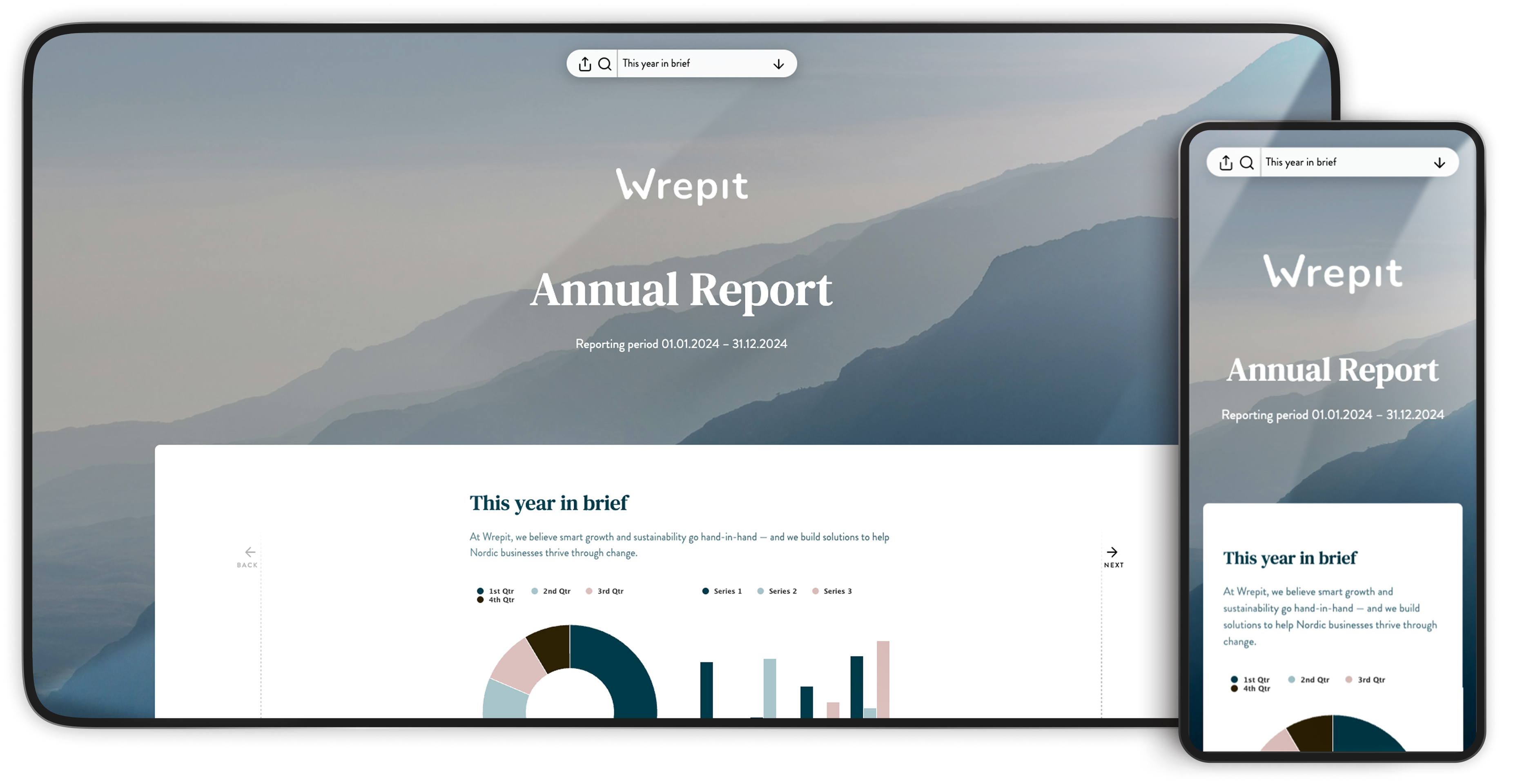
Move beyond static formats. Digital, web-based reports make it easier to navigate, search, and interact with content.
They also project professionalism and transparency - key to building trust with investors, regulators, and the public.
The Bottom Line: Simplicity Wins
Financial reporting doesn’t have to be complex or too expensive.
The most successful finance teams aren’t the ones with the biggest systems - they’re the ones who keep things simple, structured, and consistent.
When your process is clear, your data connected, and your workflow easy to use, automation starts working for you, not the other way around.
The future of reporting isn’t about more systems - it’s about smarter ones that empower teams to move faster, stay compliant, and communicate with confidence.
And that’s exactly what modern platforms like Wrepit make possible.
At Wrepit, we’re transforming how CFO teams manage financial and sustainability reporting - making it faster, simpler, and fully compliant.
Used by 60+ companies in Norway, including around 10% of those listed on the Oslo Stock Exchange, Wrepit delivers measurable efficiency gains of 70–90% time saved across reporting workflows.
Our approach is built for impact and clarity, not complexity:
- Rapid onboarding – most teams are up and running in under 2 hours, with no consultants or custom integrations required.
- Familiar tools – connect directly from Excel into Word-style editing so your data flows naturally into the text where you write.
- Automatic, high-quality design – produce polished, branded annual and sustainability reports without relying on in-house designers or costly external agencies.
- Full regulatory compliance – from ESEF and CSRD to machine-readable XBRL tagging, compliance is built in as you write - not added after the fact.
We believe reporting should enable, not burden!
Wrepit helps teams publish reports that are accurate, engaging, and interactive, with built-in version control, brand consistency, and secure sharing. See how Wrepit simplifies this.
If you’re looking to keep pace with evolving reporting requirements, strengthen stakeholder trust, and reclaim hundreds of hours every year, book a quick demo today!
Last updated: 22.05.2026